TLDR
Audit your current citations and backlinks to identify gaps in high-value directories, then focus on Tier 1 sources like Google Business Profile and Healthgrades. Backlinks from dental associations and health publications signal authority to Google, while consistent business name, address, and phone listings across directories directly impact search rankings and patient trust.
- Why Authority Matters in Local Dental Search
- Understanding Backlinks and Their Role in Dental SEO
- Local Citations: The Foundation of Dental Practice Visibility
- High-Value Dental Citations vs. Vanity Listings
- Audit Your Current Backlink and Citation Profile
- Earning High-Quality Backlinks for Dental Practices
- Ensuring NAP Consistency Across Your Web Presence
- Building an Authority Strategy That Fits Your Practice
- Key Considerations and Next Steps
- Summary
- FAQ
Why Authority Matters in Local Dental Search
When patients search for a dentist nearby or a specific service like “orthodontist in Peekskill,” Google’s algorithm relies on authority signals to decide which practices appear at the top. These signals include backlinks from trusted sources and consistent citations across directories. Practices with strong authority appear higher in local pack results, Google Maps, and organic search—the places where new patients actually look.
Building dental practice authority through strategic backlinks and local citations directly influences whether your practice becomes visible to patients searching for care in your area. Dental website development that incorporates strong citation and backlink foundations ensures your online presence works as a unified system to attract qualified patients.
Without authority, even a well-designed website struggles to compete because Google treats authority as proof that your practice is trustworthy and relevant to the local community. Authority building is not about accumulating hundreds of citations or backlinks. Instead, it’s about strategic placement in the sources that Google and patients trust most. A single backlink from a dental association carries more weight than dozens of links from unrelated websites.
Similarly, being listed in Healthgrades matters more than appearing in ten low-authority business directories. This distinction separates practices that see real patient acquisition from those that chase vanity metrics without results.
Understanding Backlinks and Their Role in Dental SEO
A backlink is simply a link from another website to yours. When a dental association, health publication, or local business network links to your practice website, Google interprets that link as a vote of confidence. The more votes you receive from trusted sources, the higher your authority score climbs. Backlinks form a critical part of how search engines evaluate your practice’s credibility and relevance in local search results.
However, not all backlinks carry equal weight. Backlinks from dental associations, health publications, and local business networks carry significantly more SEO weight than links from unrelated or low-authority websites. A link from the American Dental Association or a respected dental journal signals relevance and credibility far more than a link from a random directory.
Practices sometimes worry that earning backlinks requires purchasing them or engaging in link schemes. This approach harms your authority because Google penalizes manipulative link-building. Instead, ethical backlink strategies focus on earning links naturally through activities your practice already does or can easily do.
Sponsoring a local youth sports team, contributing guest articles to dental publications, joining professional associations, or participating in community health events all create opportunities for relevant websites to link back to you. These earned links reflect genuine relationships and community involvement, which Google rewards.
Local Citations: The Foundation of Dental Practice Visibility
A local citation is any online mention of your business name, address, and phone number—what marketers call NAP. These citations appear in directories, review platforms, social media, and business listings. When your NAP is consistent across all these sources, Google treats it as a trust signal that your practice is legitimate and stable.
Inconsistent or incomplete citations confuse Google’s algorithm and reduce your local search visibility. For example, if your practice is listed as “Smith Dental” on Google Business Profile but “Smith Dentistry” on Yelp, Google may treat these as different businesses, splitting your authority between them.
Citation completeness matters as much as consistency. A citation that includes your business name, address, phone number, website, and hours of operation sends a stronger authority signal than one missing several fields. Practices that invest time in ensuring their citations are complete and accurate across high-authority directories see measurable improvements in local search rankings and patient inquiries.
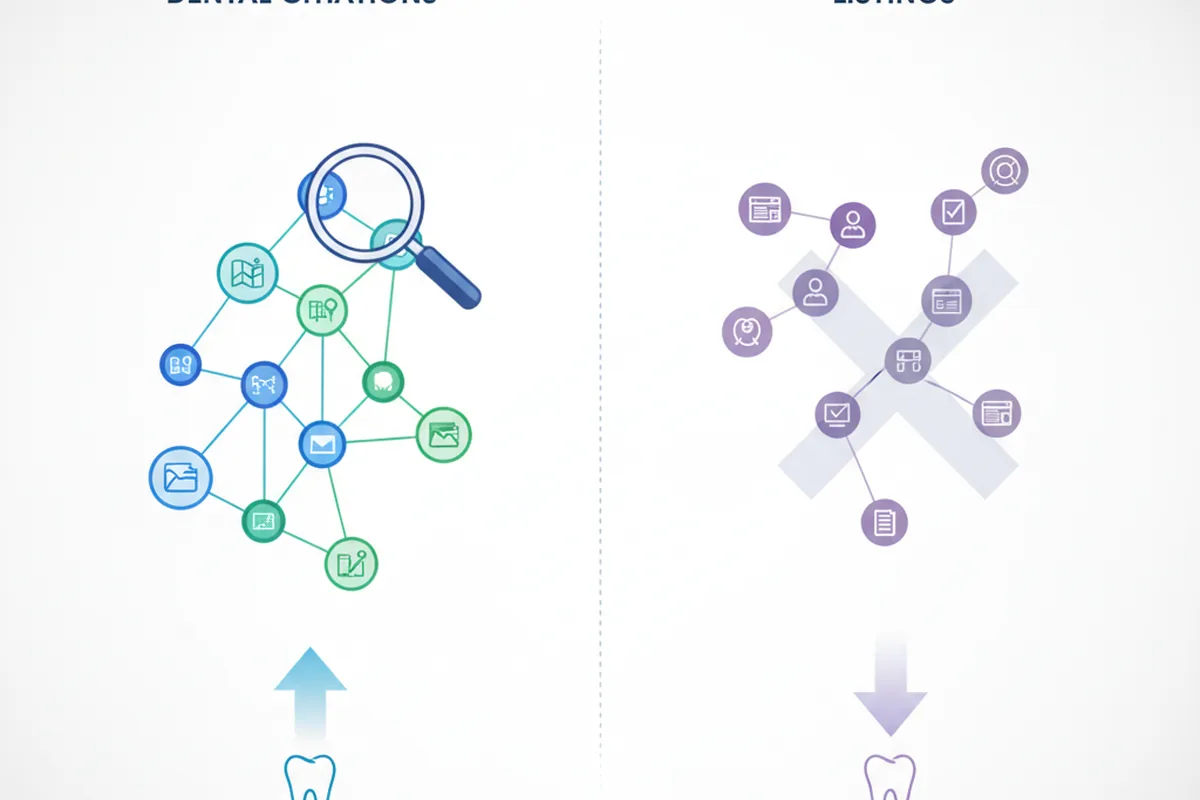
High-Value Dental Citations vs. Vanity Listings
Not every directory listing contributes equally to your authority. Understanding which citation sources matter helps you prioritize your effort and resources. The most valuable citations fall into clear tiers, each carrying different weight for search rankings and patient trust.
Tier 1: Google Business Profile and Major General Directories
Your Google Business Profile is non-negotiable. It appears in Google Maps, local pack results, and organic search, making it the single most important citation for local visibility. Yelp and Apple Maps follow closely because they are trusted by millions of patients and carry significant authority weight. These three sources should be your first priority.
Tier 2: Dental-Specific Directories
Dental-specific directories such as Healthgrades and Zocdoc have higher relevance weight for dental practice search rankings than general business directories. Patients actively use these platforms to find and evaluate dental providers, so being listed with complete information and positive reviews directly influences patient decisions. These directories also signal to Google that your practice is a legitimate dental provider.
Tier 3: Professional Associations and Niche Directories
Membership in the American Dental Association, state dental societies, or specialty associations creates backlink opportunities and builds credibility. Local business networks, chamber of commerce listings, and community directories also matter, though less than Tier 1 and Tier 2 sources.
Vanity Listings to Avoid
Hundreds of low-authority directories exist solely to collect business information and sell premium listings. These sites offer little SEO value and may even harm your authority if they contain outdated or incorrect information. Avoid paying for listings in obscure directories or directories that do not verify business information.
Audit Your Current Backlink and Citation Profile
Before building your authority strategy, assess where you stand. Start by identifying all the places your practice is currently listed. Search for your practice name, address, and phone number online to find existing citations.
Check whether your NAP is consistent across Google Business Profile, Yelp, Healthgrades, Zocdoc, and your website. Look for citations with outdated information, missing fields, or incorrect details. Note which high-value directories are missing your practice entirely—these represent immediate opportunities.
For backlinks, review which websites currently link to your practice. If your practice sponsors a local event, participates in community initiatives, or holds professional memberships, check whether those organizations link back to you. Identify gaps where relevant backlink opportunities exist but have not yet been pursued.
This diagnostic work takes time but reveals exactly where your authority is strong and where it needs reinforcement. If you lack in-house tools or expertise to conduct a thorough audit, many dental marketing agencies offer this service. The goal is to understand your current position so you can prioritize efforts on high-impact improvements rather than spreading resources too thin across low-value activities.
Earning High-Quality Backlinks for Dental Practices
Ethical backlink strategies for dental practices include earning links through professional association membership, local community sponsorships, and guest contributions to dental publications. When you join the American Dental Association or a state dental society, these organizations often link to member practice websites. This single backlink from a trusted authority carries significant weight.
Similarly, sponsoring a local school fundraiser, youth sports team, or community health initiative creates natural opportunities for local news outlets and community websites to link back to your practice. Guest contributions to dental publications and industry blogs also generate relevant backlinks. If you write an article about orthodontic care for a dental publication or contribute to a professional blog, the publication typically links back to your practice website.
This positions you as an expert while earning a backlink from a trusted source. Local news coverage of your practice—whether a feature story, community involvement, or patient testimonial—creates backlinks from news websites, which Google treats as highly authoritative. Building relationships with other local businesses, dental suppliers, and healthcare providers can also lead to backlink opportunities.
Ensuring NAP Consistency Across Your Web Presence
NAP consistency is a critical trust signal that directly impacts search ranking and patient trust. Your business name, address, and phone number must be identical everywhere they appear: your website footer, contact page, Google Business Profile, all directory listings, social media profiles, and schema markup code.
Even small variations—like “Dr. Smith Dental” versus “Smith Dental” or including a suite number in one place but not another—confuse Google’s algorithm and reduce your local search visibility. Conduct a complete audit of your web presence. Check your website’s footer, contact page, and about page. Review your Google Business Profile, Yelp listing, Healthgrades profile, and every other directory where you appear.
Create a master list of the correct NAP information and use it as a reference. If you find inconsistencies, update them immediately. Going forward, maintain a single source of truth for your NAP and use it consistently across all new listings and updates. Schema markup—structured data code on your website—also plays a role. Your website’s schema should include your business name, address, phone number, and other key information in a format Google can easily read.
Building an Authority Strategy That Fits Your Practice
Authority building is an ongoing process, not a one-time project. The timeline and effort required depend on your practice’s current stage, resources, and goals. A startup practice with no citations or backlinks faces a longer journey than an established practice that simply needs to fill gaps and improve consistency. However, every practice can build meaningful authority with a clear approach.
Start by prioritizing Tier 1 sources: ensure your Google Business Profile is complete, accurate, and optimized; claim and update your Yelp listing; and verify your presence on Apple Maps. This foundation typically takes a few weeks but delivers immediate results. Next, move to Tier 2 sources like Healthgrades and Zocdoc. Finally, pursue professional association memberships and community backlink opportunities that align with your practice’s values and capacity.
Time Investment and Resource Planning
Time investment varies by practice size and in-house capacity. A solo practice owner managing citations in-house might spend 5-10 hours initially to audit and update listings, then 2-3 hours monthly to maintain consistency and pursue new opportunities. A larger practice with a marketing coordinator can distribute this work more easily. Earning backlinks through professional involvement and community sponsorships requires ongoing engagement but often fits naturally into practice operations.
In-House vs. Outsourced Authority Building
Practices without in-house SEO expertise often benefit from specialized dental marketing support to build and maintain meaningful authority, as the process requires ongoing management and industry-specific knowledge. Dental marketing agencies understand which directories matter most, how to optimize citations for local search, and how to identify realistic backlink opportunities in your market.
They also track results and adjust strategy based on what actually drives patient acquisition for your practice. For practices in Peekskill and beyond, exploring how dental website development integrates with citation and backlink strategy ensures your online presence works as a unified system to attract and convert patients.
Key Considerations and Next Steps
Build dental practice authority through strategic backlinks and local citations to directly improve your search visibility and patient acquisition. Unlike generic SEO tactics, this approach targets the sources that Google and patients trust most, delivering qualified traffic rather than vanity metrics. Practices that focus on a few high-impact citations and dental-specific backlinks see better results than those chasing hundreds of low-value listings.
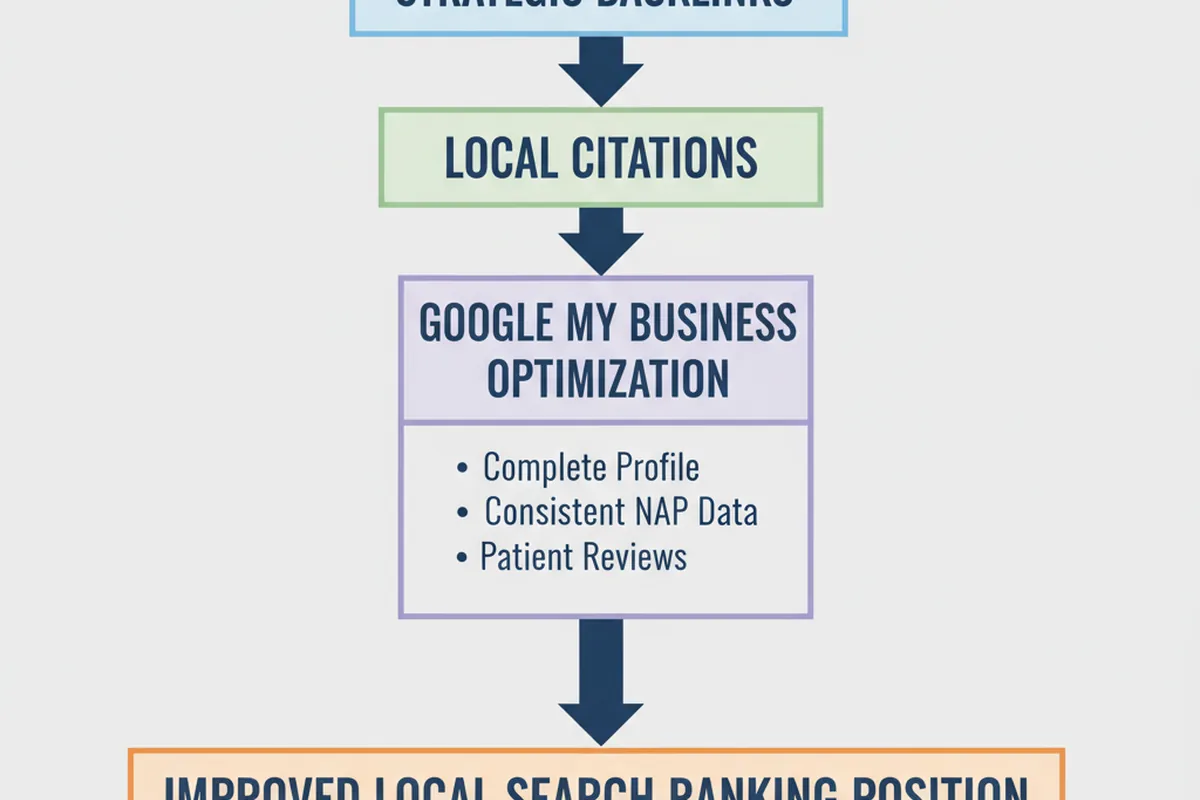
Authority building is an investment that compounds over time. Your first citation improvements may take weeks to show in search rankings, but consistent effort creates momentum. As your authority grows, you’ll notice higher rankings for local search terms, more patient inquiries from search, and improved visibility in Google Maps and local pack results.
If you’re ready to strengthen your practice’s authority, start with a complete audit of your current citations and backlinks. Identify gaps in high-value directories and inconsistencies in your NAP information. Then prioritize filling those gaps based on the tier framework outlined above.
For practices seeking comprehensive support, exploring Dental Website Development that integrate SEO and citation management can accelerate your results. Understanding the difference between Diy Vs Professional helps you decide whether managing authority building yourself makes sense for your practice.
Additionally, learning how Orthodontist Website Development ensures your authority-building efforts lead to actual patient bookings. Reviewing Security Orthodontist Website protects both your practice and your patients’ data as you build your online presence.
Finally, understanding 3 Things Practices ensures your authority strategy supports a website that converts visitors into patients.
Summary
Backlinks and local citations form the foundation of dental practice authority in search results. Backlinks from dental associations, health publications, and local business networks signal to Google that your practice is trustworthy and relevant. Local citations—consistent listings of your business name, address, and phone number across directories—directly impact search rankings and patient trust.
High-value sources like Google Business Profile, Healthgrades, and professional associations carry far more weight than vanity listings. By auditing your current profile, prioritizing Tier 1 and Tier 2 citations, earning ethical backlinks through professional involvement and community engagement, and maintaining NAP consistency across your web presence, you build the authority that drives qualified patient traffic and establishes your practice as a credible choice in your market.
Whether you manage this effort in-house or partner with specialized dental marketing expertise, consistent authority building delivers measurable results over time. Educational note: This article is a general guide. It does not replace advice for your own practice’s needs. The options discussed have limitations, and results may vary based on your market, practice stage, and implementation approach.
FAQ
What is the difference between a backlink and a citation for dental SEO?
A backlink is a hyperlink from another website to yours, signaling authority and relevance to Google. A citation is a mention of your business name, address, and phone number in a directory or online platform, signaling legitimacy and local relevance. Both matter for search rankings, but they work differently. Backlinks demonstrate that other trusted sources vouch for your practice. Citations establish that your practice information is consistent and verifiable across the web.
Why does NAP consistency matter so much for local search?
Google uses NAP consistency as a trust signal. When your business name, address, and phone number are identical across your website, Google Business Profile, and all directory listings, Google gains confidence that your information is accurate and your practice is legitimate. Inconsistencies confuse Google’s algorithm and can split your authority between different versions of your business name, reducing your local search visibility.
Which dental directories should I prioritize for citations?
Prioritize Google Business Profile first, it appears in Google Maps and local search results where patients actively look. Next, focus on Yelp and Apple Maps. Then move to dental-specific directories like Healthgrades and Zocdoc, which have higher relevance weight for dental practices. Professional association listings and local chamber of commerce entries follow. Avoid low-authority vanity directories that offer little SEO value.
How long does it take to see results from building backlinks and citations?
Citation improvements typically show in local search rankings within 2-4 weeks after you update or add listings. Backlinks take longer, usually 4-8 weeks or more, because Google must discover and evaluate the new links. However, authority building compounds over time. Consistent effort across multiple citations and backlinks creates momentum that delivers measurable patient acquisition results within 3-6 months.
Can I earn backlinks without purchasing them or engaging in link schemes?
Yes. Ethical strategies include joining professional associations that link to member websites, sponsoring local community events, contributing guest articles to dental publications, participating in local news coverage, and building relationships with other local businesses. These earned links reflect genuine involvement and community presence, which Google rewards. Purchased or manipulative links harm your authority and can result in search ranking penalties.
Should I manage citations and backlinks in-house or hire an agency?
This depends on your practice’s size, resources, and expertise. Small practices with limited staff may benefit from outsourced support, as the process requires ongoing management and industry-specific knowledge. Larger practices with a dedicated marketing coordinator can manage basic citation consistency in-house. However, identifying and earning high-quality backlinks often requires specialized expertise and relationships that dental marketing agencies bring. Many practices find a hybrid approach works best.