

TLDR
Website development for dental practices moves through five phases: discovery and planning (1–3 weeks), design and content development (4–8 weeks), technical development (5–9 weeks), launch (1–2 weeks), and post-launch optimization (30–60 days). Basic builds take 8–10 weeks; standard custom designs 12–16 weeks; comprehensive builds 18–24+ weeks.
Search engine optimization helps dental and orthodontic practices appear in search results when prospective patients look for care online. For a broader overview, visit Seo Practices Dental.
Building a website for your dental or orthodontic practice requires a structured approach that accounts for clinical accuracy, patient trust, and compliance—not simply a design project. Unlike general service websites, orthodontic websites must coordinate clinical content review, HIPAA compliance, patient education accuracy, and integration with practice management systems.
This guide walks you through the complete website development process broken into discrete phases with timelines and key deliverables, explains the critical decisions practices must make before development begins, covers specific considerations for dental and orthodontic practices that affect timeline and scope, describes what happens after launch through ongoing optimization and performance tracking, and helps you choose between timeline options based on your practice’s needs.
Table of contents
- How Long Does Discovery and Planning Take?
- How Long Does Design and Content Development Take?
- How Long Does Technical Development Take?
- How Long Does Launch Take?
- Timeline Variations by Build Complexity
- What Factors Affect Your Website Timeline?
- Ensuring Launch Readiness and Post-Launch Success
- Next Steps: From Timeline to Action
- Summary
- FAQ
How Long Does Discovery and Planning Take?
Every successful website project begins with a thorough discovery and planning phase. This stage sets the foundation for all downstream decisions, timelines, and deliverables. During discovery, you and your development partner align on business goals, define the scope of work, audit your current digital presence, and establish the project roadmap. Rushing through discovery often leads to scope creep, approval delays, and missed deadlines later, so investing time upfront pays dividends.
Timeline and Key Milestones
The discovery and planning phase for dental website projects typically spans 1–3 weeks. In the first week, your development partner conducts a competitive audit, reviews your current website (if one exists), and interviews key stakeholders—the practice owner, clinical team, and marketing decision-maker—to understand your goals, patient demographics, and operational workflows.
A goals workshop follows, where you define specific outcomes: how many new patient inquiries do you want to generate, what patient journey do you want to support, and what clinical or operational challenges does your current website create?
By the end of week one or early week two, the team documents the project scope: which pages you need, what features (booking system, patient forms, review automation), what integrations with your practice management system are required, and what compliance or clinical review processes must happen. A detailed project timeline is created, showing which phases overlap and which depend on prior completion. This scope document becomes your reference point for the entire project and helps prevent scope creep.
Critical Decisions in This Phase
Three critical decisions made during discovery directly affect all downstream timelines and costs. First, define your patient acquisition goals and the website’s role in achieving them. Are you launching a new practice and need to build awareness from zero? Are you an established practice trying to attract a specific patient demographic or service line? This clarity shapes content strategy, design direction, and feature priorities.
Second, select your build complexity tier: basic, standard, or comprehensive. A basic build uses a template with minimal customization, suitable for practices with straightforward needs and tight budgets. A standard build includes custom design, moderate feature integration, and personalized content—the most common choice for established practices. A comprehensive build offers fully custom design, extensive integrations (multiple EMR systems, advanced booking, CRM automation), and sophisticated patient journey mapping. This choice affects timeline, cost, and resource requirements.
Third, identify your clinical and compliance requirements upfront. Will your clinical team need to review all patient education content for accuracy? Do you need HIPAA-compliant patient testimonials or before-and-after galleries? Will you integrate with a specific practice management system, and does that system require custom development? These requirements add time to the design and content phases, so naming them early prevents surprises.
How Long Does Design and Content Development Take?
Once scope is defined, design and content development proceed in parallel or sequence, depending on your project structure. This phase is where your website’s visual identity, messaging, and clinical accuracy come together. For dental practices, this phase typically takes longer than for general service businesses because clinical content must be reviewed for accuracy and compliance, and patient education messaging must build trust and address common concerns.
Timeline and Key Activities
Design and content development typically spans 4–8 weeks, though practices with complex clinical review processes or multiple approval layers may extend this. The first 1–2 weeks focus on design direction: your development partner creates mood boards, color palettes, and initial design concepts based on your brand guidelines and competitive analysis. You review these concepts and provide feedback, refining the visual direction until it aligns with your practice’s identity and patient expectations.
Weeks 2–3 involve wireframing and site architecture review. Wireframes are low-fidelity layouts showing page structure, content hierarchy, and user flow—how a patient moves from landing on your homepage to booking an appointment. This step is critical because it defines the patient journey before design and development begin. You review wireframes with your team, confirm that the booking flow matches your intake process, and ensure all essential information is included.
Weeks 3–6 are dedicated to copywriting and clinical review. Your content team drafts all website copy: homepage messaging, service descriptions, patient education content, and call-to-action text. For dental practices, this content then goes to your clinical team for accuracy review. A hygienist or dentist reads every clinical claim, verifies that treatment descriptions are accurate, and flags any language that overstates outcomes or makes unsupported claims. This review cycle often takes 2–4 weeks because clinical staff have limited time and may request multiple revisions.
Weeks 4–6 also cover media planning: selecting or creating images, scheduling before-and-after photography if needed, planning video content, and sourcing icons or illustrations. For practices without existing professional photography, scheduling a photo shoot adds 1–2 weeks to the timeline.
Dental-Specific Content Requirements
Dental and orthodontic websites involve clinical content review and HIPAA compliance vetting as part of the design and content development phase. Clinical accuracy review is non-negotiable: every claim about treatment outcomes, procedures, or patient benefits must be reviewed by a licensed clinician. Patient education content must be accurate, accessible, and compliant with American Dental Association oral health recommendations and state dental board regulations. Testimonials and patient stories require written consent and must not disclose protected health information.
Before-and-after galleries are powerful marketing tools but require careful handling. Each image must have explicit patient consent, and captions must not make outcome claims or comparative statements. Your website should include a disclaimer that results vary and that before-and-after images represent individual cases, not typical outcomes. Intake process clarity is also critical: your website should accurately describe your new patient process, what to expect at the first visit, and what information patients need to bring. This builds trust and reduces no-shows.
Compliance vetting extends beyond clinical accuracy. Your website must comply with HIPAA if you collect patient information, ADA accessibility standards (WCAG 2.1 AA), and state-specific dental board regulations. Some states restrict certain claims about cosmetic dentistry or orthodontics. Your development partner should be familiar with these regulations, but your clinical team should also review the final site to confirm compliance.
How Long Does Technical Development Take?
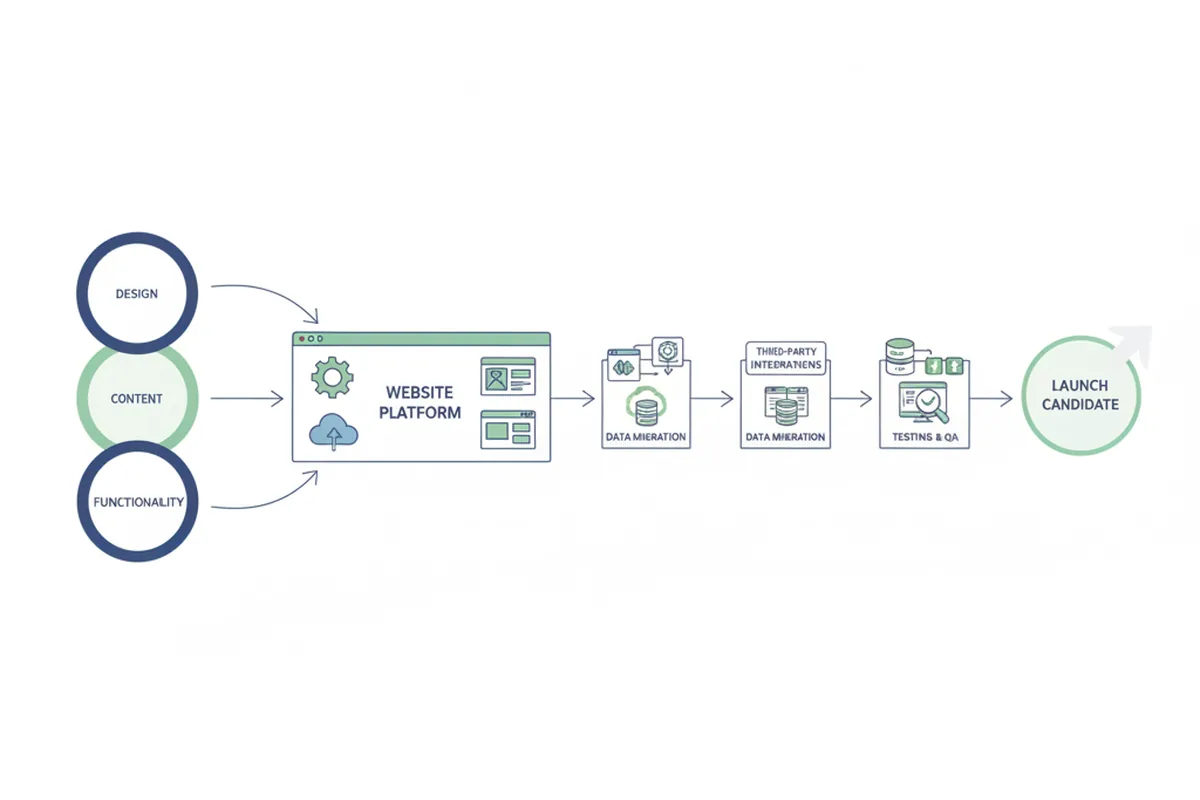
Once design is approved and content is finalized, the technical development phase begins. This is where your website is actually built: front-end design is converted to code, the back-end database and server infrastructure are set up, content is populated, and features like booking systems, review automation, and CRM integrations are connected. This phase is highly technical but critical to your launch success.
Timeline and Development Milestones
The development and integration phase typically requires 5–9 weeks, including responsive design implementation, back-end setup, content population, feature integration, and testing cycles. The first 1–2 weeks focus on responsive design implementation: converting approved designs into HTML, CSS, and JavaScript code that works seamlessly on desktop, tablet, and mobile devices. Your development team tests each page on multiple browsers and devices to ensure consistent appearance and functionality.
Weeks 2–3 cover back-end and database setup: building the server infrastructure, setting up databases for patient forms and inquiries, configuring hosting and security protocols, and implementing SSL encryption for patient data protection. This foundation is invisible to patients but essential for security and performance.
Weeks 3–4 involve content population and SEO optimization. All approved copy, images, and media are uploaded to the website. Your development team optimizes each page for search engines: writing meta descriptions, structuring headings, adding alt text to images, and ensuring fast page load times. This technical SEO work is foundational to your organic search visibility and should not be skipped.
Weeks 4–5 focus on feature integration: connecting your booking system (Acuity, Calendly, or your practice management system’s native booking), setting up review automation (Google, Yelp, Healthgrades), integrating your CRM or practice management system, and configuring contact forms and patient intake workflows. Each integration requires testing to ensure data flows correctly from your website into your practice management system.
Weeks 5–6 include comprehensive testing cycles. Your development team runs cross-device and cross-browser testing, validates all forms and workflows, tests the booking system end-to-end, and performs a technical SEO audit. Performance testing ensures your site loads quickly even under heavy traffic. This testing phase prevents costly post-launch issues and should not be rushed.
Testing and Launch Readiness
Before your website goes live, it must pass a comprehensive testing checklist. Cross-device and browser testing confirms that your site works on Chrome, Safari, Firefox, and Edge, and on iOS and Android devices. Form and workflow validation ensures that contact forms submit correctly, patient intake forms capture all required information, and confirmation emails are sent. Booking system verification confirms that appointment slots display correctly, that your practice management system receives bookings, and that confirmation and reminder emails work.
A technical SEO audit checks that your site is properly indexed by search engines, that your XML sitemap is submitted to Google Search Console, and that your robots.txt file is configured correctly. A compliance audit reviews your privacy policy, terms of service, and HIPAA compliance measures. Performance optimization ensures your site meets Google’s Core Web Vitals standards: fast load times, stable layout, and responsive interactivity. These metrics directly affect your search ranking and user experience.
How Long Does Launch Take?
Launch is not a single moment—it is a carefully orchestrated event preceded by final reviews and followed by intensive monitoring. The launch phase typically spans 1–2 weeks before go-live and includes critical final steps that prevent costly mistakes.
Pre-Launch Checklist and Timeline
In the final 1–2 weeks before launch, your team completes a detailed pre-launch checklist. Final content review confirms that all copy is accurate, all images are optimized, and all links work. Legal and compliance sign-off ensures that your privacy policy, terms of service, and clinical disclaimers are reviewed by your legal counsel and that your clinical team has approved all patient education content.
DNS and hosting verification confirms that your domain name is properly configured to point to your new website and that your hosting provider is ready for the traffic surge. Monitoring and analytics setup ensures that Google Analytics, Google Search Console, and your CRM are configured to track visitor behavior, form submissions, and booking conversions.
Team training prepares your staff to use new patient-facing features: how to respond to online inquiries, how to manage bookings through the new system, and how to monitor reviews. Backup and rollback procedures are documented so that if critical issues arise, your team can quickly revert to your previous website. On launch day, your development partner performs a final site check, updates your DNS records, and monitors your site’s performance in real time. Your team should be available to respond to any immediate issues.
Post-Launch Monitoring and Early Optimization
Post-launch optimization spans 30–60 days after go-live and includes performance monitoring, user behavior analysis, bug fixes, and improvements informed by real patient traffic. Performance monitoring tracks page load times, mobile usability, and conversion rates. User behavior analysis uses Google Analytics to show which pages patients visit most, where they drop off, and which calls-to-action drive the most inquiries.
Bug fixes and quick optimizations address any issues that surface: broken links, form errors, or booking system glitches. SEO indexing verification confirms that Google has crawled and indexed your new site. You monitor your search rankings for target keywords and submit any new pages to Google Search Console to accelerate indexing. Patient feedback collection—through surveys, reviews, and direct conversations—reveals how your website is perceived and what improvements matter most to your patients. This feedback informs your longer-term optimization strategy and helps you prioritize future updates.
Timeline Variations by Build Complexity
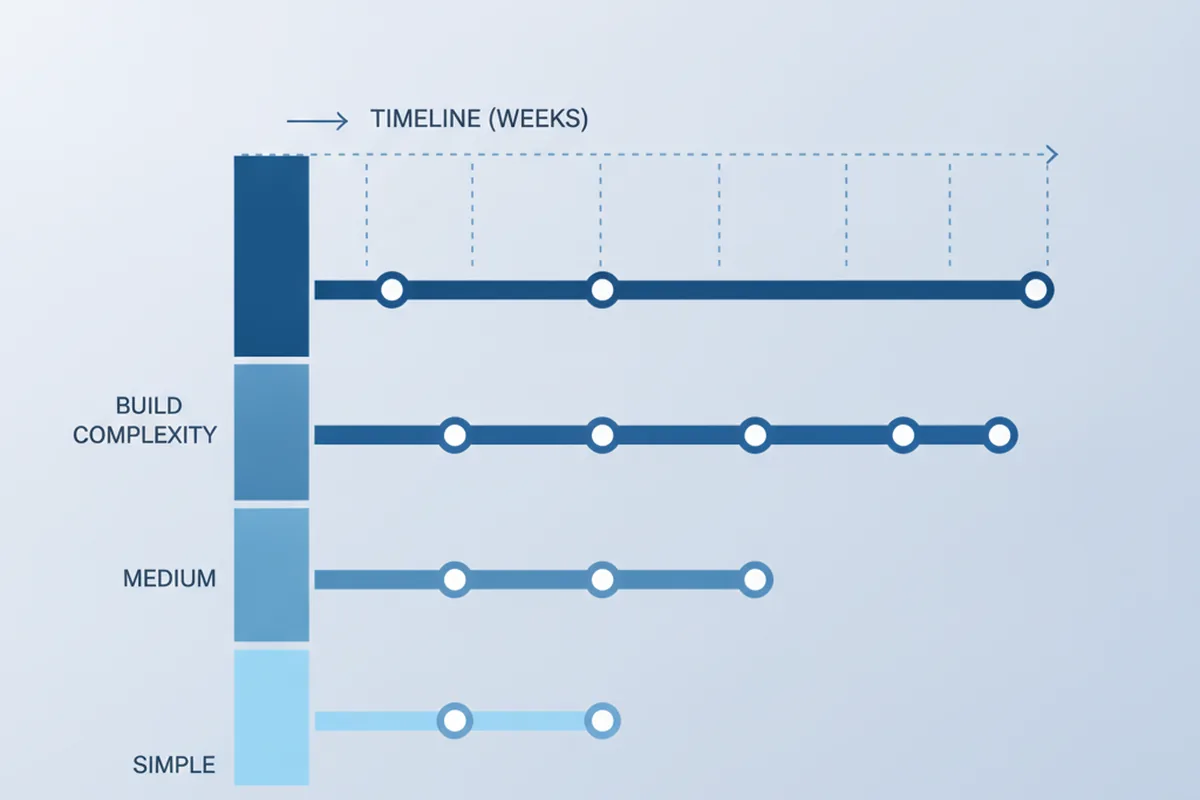
Website timelines vary significantly based on the scope and complexity of your build. Understanding which tier fits your practice helps you set realistic expectations and allocate budget effectively. Website builds vary in total duration based on complexity: basic template-based builds typically require 8–10 weeks, standard custom designs 12–16 weeks, and comprehensive fully-custom builds 18–24+ weeks.
Comparing Basic, Standard, and Comprehensive Builds
A basic build uses a pre-designed template with minimal customization. You select a template, customize colors and fonts, populate content, and integrate basic features like a contact form and Google Maps. Basic builds are suitable for new practices with straightforward needs, limited budgets, or tight timelines. The trade-off is limited design differentiation and fewer integration options.
A standard build includes custom design tailored to your brand, moderate feature integration (booking system, review automation, basic CRM integration), and personalized content strategy. Standard builds are the most common choice for established practices seeking a professional, differentiated online presence. This tier balances customization, functionality, and timeline. Most practices find that a standard build delivers the features and design quality needed to compete effectively and support patient acquisition.
A comprehensive build offers fully custom design, extensive integrations (multiple EMR systems, advanced booking workflows, sophisticated CRM automation), custom development for unique features, and deep patient journey mapping. Comprehensive builds are suited for large practices, multi-location groups, or practices with complex operational needs. The investment is higher, but the result is a website that deeply integrates with your operations and supports advanced marketing automation.
What Factors Affect Your Website Timeline?
Several internal and external factors commonly extend or compress website development timelines. Understanding these dependencies helps you plan realistically and communicate clearly with your development partner. Practices often benefit from exploring Seo Practices Dental as part of their overall website planning. Understanding how your website fits into a broader marketing strategy—including Dental Websites Key, Google Discover Seo, and Mobile Websites Orthodontic—helps you make informed decisions about scope and features.
Common Timeline Delays and How to Avoid Them
Clinical content approval cycles are a common factor affecting timeline in dental website projects, as clinical accuracy review requires coordination between clinical staff and marketing teams. Clinical staff have limited time and may request multiple revisions to ensure accuracy. To mitigate this, assign a single clinical reviewer who has decision-making authority, establish a clear approval timeline (e.g., 5 business days per review cycle), and provide reviewers with a style guide and examples of approved language upfront.
Last-minute scope changes—adding new pages, features, or integrations after development has begun—derail timelines and budgets. To prevent this, finalize your scope during the discovery phase and document any change requests with timeline and cost impacts. Delayed payment or sign-off can halt a project. Establish a payment schedule aligned with project milestones and ensure that decision-makers are available for timely approvals.
Integration issues with existing systems—your practice management system, EMR, or booking platform—can extend the development phase if those systems have limited API access or require custom development. Identify integrations early and confirm technical feasibility during discovery. Staff turnover affecting project continuity is a risk if your internal project owner leaves or if key clinical reviewers become unavailable. Document all decisions and maintain clear communication so that new team members can quickly get up to speed.
How to Prepare and Stay On Track
Assign a dedicated project owner within your practice—someone with authority to make decisions and coordinate approvals. This person is your development partner’s primary contact and ensures that requests are handled promptly. Establish approval workflows before development begins: who reviews clinical content, who approves design, who signs off on final launch? Document these workflows so that everyone knows their role and timeline.
Gather clinical content and images early. If you need professional photography, schedule the shoot before design begins so images are ready for the design phase. If you are repurposing existing content, audit it for accuracy and compliance before providing it to your development team. Schedule regular check-ins with your developer or agency—weekly or bi-weekly—to review progress, address blockers, and keep the project on track. Document all decisions in writing so that there is no ambiguity about what was approved and when.
Ensuring Launch Readiness and Post-Launch Success
Launch readiness means more than a website that looks good and functions technically. It means your entire practice is prepared to support the new website and capitalize on the patient inquiries it generates. Your team should understand how your website connects to your broader marketing strategy and how to measure its impact on patient acquisition and practice growth.
Metrics to Track After Launch
After launch, track metrics that reveal how your website is performing and where to focus optimization efforts. Page load performance (measured in seconds) directly affects user experience and search ranking. Mobile usability score (from Google PageSpeed Insights) shows how well your site works on phones and tablets. Booking rate conversion—the percentage of visitors who complete a booking or inquiry form—reveals whether your site is persuasive and user-friendly.
Form completion rates show which forms patients abandon and where friction exists in your intake process. Organic traffic growth tracks how many visitors arrive from search engines over time. Patient inquiry response time measures how quickly your team responds to online inquiries—a critical factor in conversion. These metrics should be reviewed monthly during the first 60 days and then quarterly as part of your ongoing optimization strategy. Your development partner or marketing team should provide a monthly report showing these metrics and recommending optimizations based on the data.
Next Steps: From Timeline to Action
Use this timeline as a planning tool with your chosen agency or internal team. Align your stakeholders on realistic expectations: a quality website for a dental practice typically takes 12–16 weeks if you choose a standard build, not 4–6 weeks. Identify which complexity tier fits your practice’s needs and budget. Schedule an initial discovery conversation with your development partner to refine your specific project roadmap, confirm timelines, and establish approval workflows. The more clarity you bring to that conversation, the more accurate your timeline will be.
If you are evaluating agencies or developers, ask about their experience with dental practices specifically. General web developers may not understand clinical content review requirements or HIPAA compliance. Agencies with dental experience, such as those based in Peekskill and serving practices across North America, bring insights from hundreds of projects and can help you avoid common delays. Visit Orthodontic Agency Practice to see how experienced partners structure their development process and support practices through launch and beyond.
Summary
Website development for dental and orthodontic practices requires a structured timeline that accounts for clinical content review, compliance vetting, and integration with practice management systems. The process moves through five phases: discovery and planning (1–3 weeks), design and content development (4–8 weeks), technical development and integration (5–9 weeks), launch and operations (1–2 weeks), and post-launch optimization (30–60 days). Total timelines range from 8–10 weeks for basic builds to 18–24+ weeks for comprehensive builds.
Clinical content approval cycles and scope changes are the most common causes of delays, so assigning a dedicated project owner and establishing approval workflows upfront prevents costly rework. After launch, track performance metrics and user behavior to inform ongoing optimization. Your website is not a one-time project but an ongoing asset that grows with your practice and supports your patient acquisition strategy.
Educational note: This article is a general guide to website development timelines and processes for dental practices. It does not replace individualized consultation with your development partner, legal counsel, or clinical team. Timelines, costs, and outcomes vary based on your specific practice needs, existing systems, and organizational capacity. Discuss your unique requirements with your chosen agency or developer to refine these estimates for your situation.
FAQ
How long does it typically take to build a dental practice website?
A basic template-based website typically takes 8–10 weeks, a standard custom design 12–16 weeks, and a comprehensive fully-custom build 18–24+ weeks. The timeline depends on your chosen complexity tier, how quickly your team provides approvals and content, and whether you need integrations with your practice management system. Clinical content review cycles often extend timelines, so planning extra time for this step is wise.
What is the most common reason dental website projects get delayed?
Slow clinical content approval cycles are the most common delay. Dentists and hygienists have limited time to review website copy for accuracy, and they may request multiple revisions. To prevent this, assign a single clinical reviewer with decision-making authority, establish a clear approval timeline (e.g., 5 business days per cycle), and provide examples of approved language upfront.
Do I need to choose between speed and quality?
Not necessarily. A well-managed project with clear scope, assigned decision-makers, and realistic timelines can deliver both speed and quality. The key is planning upfront: define your scope during discovery, establish approval workflows before development begins, and gather content and images early. Rushing through discovery or skipping testing typically leads to poor quality and costly post-launch fixes.
What happens after my website launches?
The first 30–60 days after launch are critical. Your team monitors performance metrics (page load time, mobile usability, booking conversion rate), analyzes user behavior using Google Analytics, fixes any bugs or issues that surface, and collects patient feedback. This data informs your longer-term optimization strategy and helps you prioritize improvements that matter most to your patients.
How do I choose between basic, standard, and comprehensive builds?
Choose based on your practice’s size, budget, and operational complexity. A basic build works for new practices with simple needs and tight timelines. A standard build is ideal for established practices seeking professional design and moderate integrations. A comprehensive build suits large practices or multi-location groups with complex workflows and advanced marketing automation needs. Discuss your specific requirements with your development partner to determine which tier delivers the best value for your situation.
What should I do to prepare for a smooth website launch?
Assign a dedicated project owner within your practice, establish approval workflows before development begins, gather clinical content and images early, schedule regular check-ins with your developer, and document all decisions in writing. In the final 1–2 weeks before launch, complete a pre-launch checklist: final content review, legal and compliance sign-off, DNS and hosting verification, team training, and backup procedures. Being prepared prevents last-minute panic and ensures a smooth transition to your new website.


